If you are just starting out as a machinist you need to understand the difference between climb milling V conventional milling before you cut metal.
Understanding climb milling v conventional milling can be confusing. However, it is really easy to differentiate with the right visual cues.
In a nutshell if you are a manual machinist you will really only ever use conventional milling (climb milling can be dangerous on a manual machine, more on this below). If you are a C.N.C. machinist you will almost only ever use climb milling. This statement would likely stir some controversy in a machinist forum, there are some exceptions, but generally speaking that is the case. I will touch further on these exceptions later on.
The difference between Climb Milling v Conventional Milling lies in the direction of the cutting tool relative to the material feed. There are lots of visual diagrams online which often in my opinion are less than effective.
It is not always easy for a beginner to see whether they are climb milling v conventional milling.
The easiest way to remember is:
If the chips are being thrown forward, towards where the cutter is going, then you are Conventional Milling like this:
If the chips are being thrown backwards towards where the cutter has already been, then you are Climb Milling like this:
1. Conventional Milling (Sometimes Called “Up Milling” or “Ploughing”)
- Tool Direction: In conventional milling, the workpiece moves against the rotation of the cutting tool.
- Characteristics: The cutting edge of the tool starts at zero thickness and gradually increases.
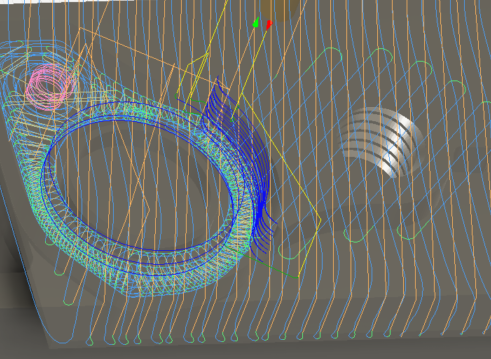
Another way to visualise whether you are conventional milling is if the cutter is moving anti clockwise around the stock as per the video below.
Advantages:
- Better for harder or uneven surfaces: Since the cutting force pushes against the machine’s ballscrew or leadscrew the cut is generally more stable and can be useful on rough stock. For example plasma cut steel which has a hardened and uneven surface along the profiled edge. This rough and hardened surface means that cutting forces vary whilst machining.
- Stable engagement: Conventional milling can provide a more stable engagement of the tool with the workpiece, especially in older or less rigid machines. Conventional milling pushes the ballscrew or leadscrew nut against the screw. Therefore the nut stays engaged even if it has some backlash (backlash is the amount of free play between the nut and the screw).
- Reduced backlash concerns: In manual machines you always have backlash in the leadscrew as there has to be some clearance between the nut and screw.
Disadvantages:
- Higher friction: Due to the upward cutting motion, the tool tends to rub more against the workpiece before cutting, which leads to increased friction and heat generation.
- Poorer surface finish: The higher friction and tearing action can result in a rougher surface finish. In soft materials like aluminium you are more likely to see chip welding. This is where melted pieces of swarf can end up stuck to your freshly machined surface, especially when using the side of the cutter.
- More tool wear: Increased heat and friction cause greater wear on cutting tools, shortening tool life.
2. Climb Milling (Down Milling)
- Tool Direction: In climb milling, the rotation of the cutting tool is in the same direction as the feed of the workpiece. The tool engages the workpiece with a thick chip at the start and exits with a thin chip.
- Characteristics: The cutting edge engages at maximum chip thickness and decreases, which helps in reducing heat and wear, more heat is dissipated in the chip.
Advantages:
- Improved surface finish: Climb milling produces a smoother surface finish due to the downward cutting motion and reduced friction.
- Lower cutting forces: The downward engagement tends to pull the workpiece towards the table. This reduces upward forces and making the process more efficient with less vibration.
- Increased tool life: Reduced friction and lower cutting forces lead to less tool wear, which enhances tool life.
- Better chip evacuation: Chips are pushed behind the tool, improving chip removal and reducing re-cutting of chips.
Disadvantages:
- Requires rigid machine setup: Climb milling can exert high forces on the machine, and if the machine is not rigid enough, vibrations or instability can occur.
- Backlash concerns: In manual or older/poorly calibrated machines, climb milling can lead to backlash problems. The cutting force is trying to pull the nut away from the screw the machine and backlash (the amount of free play in the nut
- Not suitable for all materials: For harder or abrasive materials, the aggressive engagement of the tool can lead to premature tool wear if the machine isn’t properly configured.
Comparison Summary for CNC Milling
| Aspect | Conventional Milling | Climb Milling |
|---|---|---|
| Tool Direction | Opposite to feed direction | Same as feed direction |
| Surface Finish | Rougher | Smoother |
| Cutting Forces | Higher, pushing the tool away | Lower, pulling the tool into the workpiece |
| Tool Wear | Higher due to friction and heat | Lower, reduced friction and better cooling |
| Machine Suitability | Better for older/less rigid machines. The only choice with a manual milling machine. | Requires precise, rigid machines equipped with ballscrews instead of a leadscrew (so C.N.C machines instead manual machines) |
| Chip Evacuation | Less effective, may re-cut chips | More effective, cleaner cut |
| Backlash | Less risk | Can cause issues in machines with backlash |
Climb Milling v Conventional Milling – What are the exceptions that you mentioned?
So at the start of this post I mentioned that you would in reality only ever climb mill when using a C.N.C machine and that you would only ever conventional mill on a manual machine. As climb milling on a manual machine is potentially dangerous, let us start there.
Manual Machining
- Manual milling machines are equipped with leadscrews not ballscrews.
- A leadscrew has some clearance between the threads on the screw and the nut, it has to otherwise you wouldn’t be able to move it.
- This clearance creates some free travel in the machine’s handle before the nut engages with the screw.
- This free play is called backlash.
- Conventional milling pushes the table and leadscrew nut against the leadscrew.
- Climb milling pulls the table and leadscrew nut away from the leadscrew opening up the gap between the male and female threads.
- This can cause the table to shake/oscillate violently backwards and forwards. This can cause tool breakages, yank the material from the vice and even result in a crash.
- You can get away with small climb cuts on a manual machine in soft material like aluminium, but my advice is just don’t risk it.
CNC Machining
- C.N.C machines are almost exclusively fitted with ballscrews instead of leadscrews.
- A ballscrew nut uses precision recirculating ball bearings that engage through channels on the ballscrew itself.
- As the clearance between these ball bearings and the ballscrew is so close and often a ballscrew uses two nuts, backlash can be eliminated.
- Therefore the cutter cannot cause the the ballscrew nut to “pull away” from the ballscrew during climb milling like it can with a leadscrew.
- In short you can both climb mill and conventional mill on a C.N.C machine but the disadvantages of conventional milling as listed above mean that you will nearly always Climb Mill.
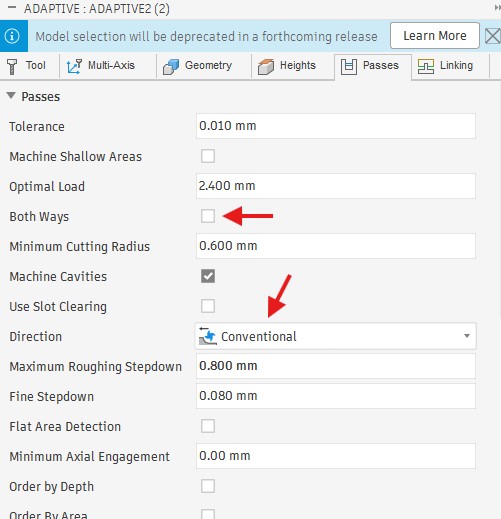
- You may opt to mill “both ways” in your CAM software to save time and reduce the amount the amount of time that you are cutting air, but this is pretty rare.
I hope this post is useful to any budding machinists out there.
If you need any help with prototyping, small batch production or CAD services then get in touch.